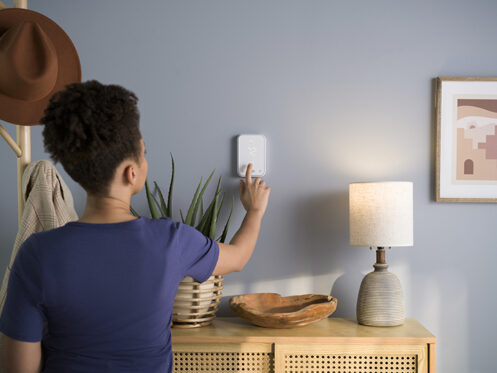
Fall weather in the Ohio River Valley can make thermostat settings tricky. A chilly morning may have you reaching for the heat, only for the afternoon to become warm enough that your home feels stuffy. Constantly switching between heating and cooling can make maintaining consistent comfort difficult.
The right strategy depends on outdoor temperatures, your HVAC equipment, and your household’s preferences. A few simple adjustments can help you stay comfortable without making your system work harder than necessary.
Why Fall Temperatures Can Be Challenging
During summer and winter, your HVAC system generally has one primary job. Fall is different. Outdoor temperatures can change considerably between morning, afternoon, and evening.
Your house also responds to these changes gradually. Sunlight may warm rooms during the afternoon, while the house can lose that heat after sunset.
Instead of adjusting the thermostat every time the outdoor temperature changes, focus on maintaining a comfortable indoor range. Giving your home time to respond can reduce unnecessary heating and cooling cycles.
Choose a Comfortable Fall Temperature
There isn’t one perfect thermostat setting for every household. Your ideal temperature depends on personal comfort, activity level, humidity, insulation, and how much sunlight enters the house.
Start with a comfortable temperature and make small adjustments rather than dramatic changes. Turning the thermostat much higher when you’re cold won’t necessarily warm the house faster. Similarly, setting the AC extremely low doesn’t provide instant cooling.
Small adjustments give your HVAC system a more reasonable target.
Take Advantage of a Programmable Thermostat
Fall is a good time to use thermostat scheduling. Instead of manually changing settings throughout the day, a programmable thermostat can automatically adjust temperatures according to your routine.
A simple fall schedule might account for:
- Cooler temperatures while everyone is sleeping
- Morning comfort while getting ready
- Reduced heating or cooling while the house is empty
- Comfortable settings when everyone returns home
- Changes between warmer afternoons and cooler evenings
If your family’s schedule varies, a smart or programmable thermostat can make these transitions easier to manage.
Should You Use Auto Mode?
Some thermostats have an automatic mode that switches between heating and cooling based on indoor temperatures. This feature can be convenient during fall when daytime and nighttime temperatures vary significantly.
Avoid setting the heating and cooling targets too close together. Without enough separation, your HVAC system may switch between heating and cooling more frequently than necessary.
A reasonable temperature range allows your home to warm or cool naturally before the equipment needs to respond.
Heat Pumps Require a Slightly Different Approach
If your home uses a heat pump, the same equipment can provide both heating and cooling. This makes heat pumps particularly convenient during unpredictable fall weather.
Avoid making unnecessarily large thermostat adjustments. Maintaining relatively consistent settings can help your heat pump operate without repeatedly responding to dramatic changes.
If the system blows air at the wrong temperature, fails to switch modes, or cannot maintain your thermostat setting, it may need professional attention.
Use Your Home to Your Advantage
Your HVAC system doesn’t have to do all the work. Fall weather provides opportunities to use natural conditions to maintain comfort.
Open blinds or curtains on sunny windows during cool mornings to take advantage of solar warmth. If the afternoon becomes comfortably mild, ceiling fans can circulate indoor air without immediately turning on the air conditioner.
Other simple fall comfort strategies include:
- Dress in light layers as temperatures change.
- Use ceiling fans to improve air circulation.
- Keep supply and return vents unobstructed.
- Replace dirty HVAC filters as needed.
- Avoid large thermostat changes.
- Use thermostat schedules around your routine.
At night, closing window coverings can also help reduce heat loss through windows.
Fall Is a Good Time for HVAC Maintenance
Thermostat settings can only do so much if your HVAC equipment isn’t operating properly. Fall provides a useful opportunity to have heating equipment checked before colder weather becomes consistent.
Professional furnace maintenance can help identify developing problems and prepare your equipment for the heating season ahead.
Routine maintenance can also address issues that affect comfort, including dirty components, airflow problems, and equipment that isn’t operating as intended.
Know When the Thermostat Isn’t the Problem
If your home remains uncomfortable regardless of thermostat adjustments, the problem may be somewhere else in the HVAC system.
Uneven temperatures, unusual noises, strange odors, weak airflow, or unexpectedly high energy bills can indicate an equipment problem. The thermostat itself can also malfunction.
If the displayed temperature seems inaccurate or your HVAC system doesn’t respond properly to changes, have the thermostat and equipment evaluated rather than repeatedly adjusting the settings.
Stay Comfortable Through Ohio River Valley Fall Weather
Cold nights and warm afternoons are part of fall in the Ohio River Valley. Instead of constantly changing your thermostat, choose a comfortable range, use scheduling features, and allow your home to respond naturally to moderate temperature changes. Regular maintenance can also help ensure your heating system is ready when colder weather settles in.
If your HVAC system is struggling to maintain comfortable temperatures or needs attention before winter, contact OnTIME Service to schedule HVAC service in Owensboro, Henderson, or the surrounding area.